
Danish Definite And Indefinite Articles Explained

Author
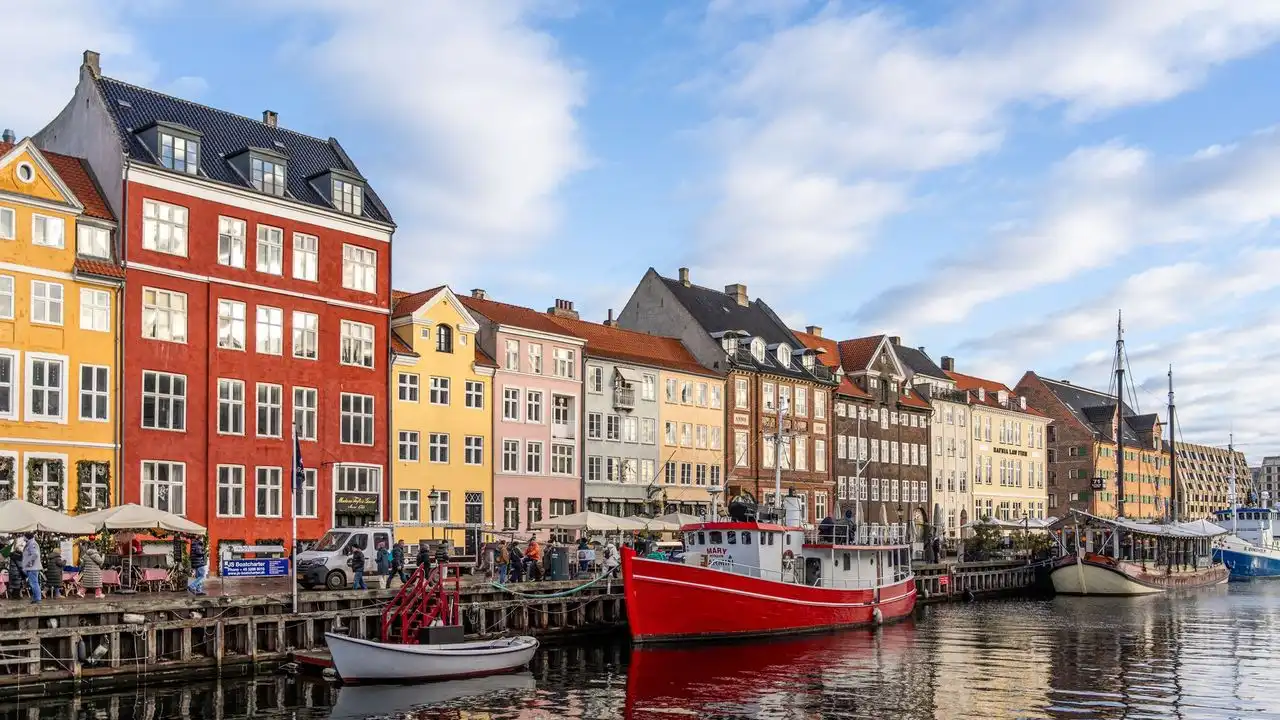
Danish uses a unique system for its articles that sets it apart from English.
Instead of always placing a separate word for “the” before a noun, Danish often attaches it to the end of the word.
Understanding how to use these definite and indefinite articles correctly is a foundational step in your language learning journey.
I’ll break down the rules for common and neuter nouns so you can use them with complete confidence.
Table of Contents:
Danish noun genders (en vs et)
To understand Danish articles, you first need to know about Danish noun genders.
Every noun in Danish falls into one of two gender categories.
These categories are the common gender (en-words) and the neuter gender (et-words).
About 75% of all Danish nouns belong to the common gender.
The remaining 25% belong to the neuter gender.
There’s no strict rule to predict which category a noun belongs to.
You simply have to memorize the gender of each new noun you learn.
Indefinite articles (a and an)
In English, we use “a” or “an” to refer to a non-specific item.
In Danish, these indefinite articles are en and et.
You place them right before the noun, just like you would in English.
Use en for common gender nouns.
Use et for neuter gender nouns.
Here are some examples of indefinite articles in Danish:
| English | Danish | Gender |
|---|---|---|
| A car | En bil | Common |
| A woman | En kvinde | Common |
| An apple | Et æble | Neuter |
| A house | Et hus | Neuter |

Jeg har en bil.
Han køber et æble.
Definite articles (the)
When talking about a specific item in English, we use the word “the”.
Danish does this entirely differently.
Instead of placing a separate word in front of the noun, Danish attaches a suffix to the end of the noun.
This means the article actually becomes part of the word itself.
For common gender words, you add -en to the end of the noun.
For neuter gender words, you add -et to the end of the noun.
If the noun already ends in an “e”, you simply add an “-n” or a “-t” to avoid a double vowel.
| Indefinite | Definite | English |
|---|---|---|
| En bil (a car) | Bilen | The car |
| En kvinde (a woman) | Kvinden | The woman |
| Et æble (an apple) | Æblet | The apple |
| Et hus (a house) | Huset | The house |
Bilen er rød.
Æblet er grønt.
Plural articles
Making nouns plural changes how the articles work.
For indefinite plural nouns (meaning “cars” or “apples”), you don’t use an article at all.
You simply use the plural form of the noun by itself.
For definite plural nouns (meaning “the cars” or “the apples”), Danish uses a different suffix entirely.
You add -ne or -ene to the end of the plural noun.
This plural definite suffix applies to both common and neuter gender words.
Jeg ser biler.
Bilerne er hurtige.
Definite articles with adjectives
There’s one major exception to the Danish suffix rule.
When you place an adjective before a definite noun, you don’t use the ending suffix.
Instead, Danish switches back to using a separate word for “the” in front of the adjective.
You use den for singular common nouns.
You use det for singular neuter nouns.
You use de for all plural nouns regardless of their gender.
| Grammar form | Danish | English |
|---|---|---|
| Singular common | Den røde bil | The red car |
| Singular neuter | Det grønne æble | The green apple |
| Plural | De hurtige biler | The fast cars |
Den røde bil er min.
Han spiser det grønne æble.
Notice how the nouns don’t have the -en, -et, or -ne suffixes attached when the adjective is present.
This freestanding article system only activates when you’re describing a specific noun with an adjective.