
Understanding Danish Dialects Will Improve Your Listening Skills

Author
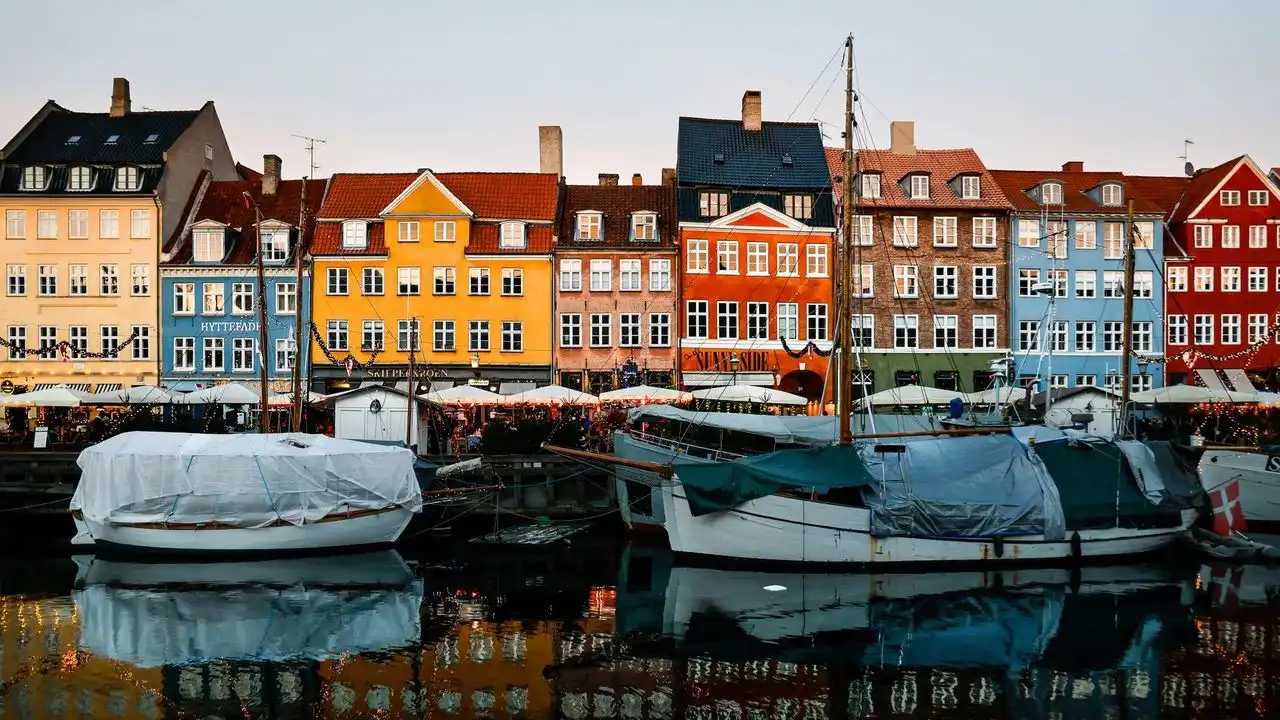
Denmark is a small country with a surprising variety of regional dialects.
Listening to native speakers often feels completely different from the audio in your language textbooks.
This happens because most learning materials only teach Standard Danish.
Familiarizing yourself with regional variations will drastically improve your overall listening comprehension.
When you know what pronunciation shifts to expect, you’ll catch words much faster in natural conversations.
Table of Contents:
Why Danish dialects matter for listening comprehension
Many learners have a hard time understanding spoken Danish in the real world.
Native speakers regularly swallow their consonants and blend words together.
Regional dialects add another layer of complexity with unique vowel changes and different grammar rules.
If you only study the standard Copenhagen accent, a speaker from Jutland might sound completely foreign to you.
Understanding these variations trains your brain to be flexible.
You’ll feel more in control when a word sounds slightly different than expected.
The three main dialect groups in Denmark
Linguists generally divide Danish dialects into three major historical groups.
These groups are based on geography and natural borders like water.
The three main groups are Jutlandic, Insular Danish, and Bornholmsk.
While traditional dialects are fading, regional accents based on these groups are still very prominent today.
Standard Danish (Rigsdansk) vs regional speech
Rigsdansk translates to “Realm Danish” and is the standard form of the language.
It’s heavily based on the traditional speech of Copenhagen and the surrounding areas.
News anchors, politicians, and official language materials almost exclusively use Standard Danish.
However, very few people speak completely pure Standard Danish in their daily lives.
Most Danes speak with a regional accent that incorporates local intonation and vocabulary.
Jutlandic (Jysk) characteristics
Jutland is the large peninsula connected to Germany.
The Jutlandic dialect, known as Jysk, is famous for being spoken at a slower, more relaxed pace.
One of the biggest grammatical differences is how the definite article is used in Western and Southern Jutland.
In Standard Danish, you add a suffix to the end of a noun to say “the”.
In traditional Western Jutlandic, the article is a separate word placed before the noun.
| English | Standard Danish | Traditional Western Jysk |
|---|---|---|
| The man | Manden | Æ mand |
| The house | Huset | Æ hus |
| The dog | Hunden | Æ hund |
Jutlanders also tend to pronounce certain consonants more clearly than people from Copenhagen.
They frequently use the regional word træls to describe something annoying or frustrating.

Det er meget træls.
Insular Danish (Ømål) characteristics
Insular Danish covers the dialects spoken on the islands of Zealand, Funen, and the smaller surrounding islands.
Funen (Fynsk) is often described as the most melodic and sing-songy dialect in Denmark.
Speakers from Funen tend to speed up their speech and use a very distinct, bouncing intonation.
Standard Danish also belongs to the Insular Danish group because Copenhagen is located on the island of Zealand.
However, the working-class dialects of Copenhagen sound much sharper and flatter than the standard language.
Bornholmsk characteristics
Bornholm is a rocky island located far out in the Baltic Sea, closer to Sweden than to the rest of Denmark.
Because of this isolation, the local dialect called Bornholmsk is highly distinct.
Many Danes from other parts of the country actually have a hard time understanding traditional Bornholmsk.
It has retained three separate grammatical genders (masculine, feminine, and neuter).
Standard Danish merged masculine and feminine into a single common gender a long time ago.
The intonation of Bornholmsk goes up at the end of sentences, which sounds very similar to spoken Swedish.
How to practice listening to different dialects
You don’t need to learn how to speak these dialects yourself.
Your goal is simply passive recognition to improve your listening skills.
Start by watching Danish television shows set in different parts of the country.
Listen to regional radio stations instead of just national broadcasts from the capital.
When you hear a word you know pronounced differently, make a mental note of the vowel shift.